

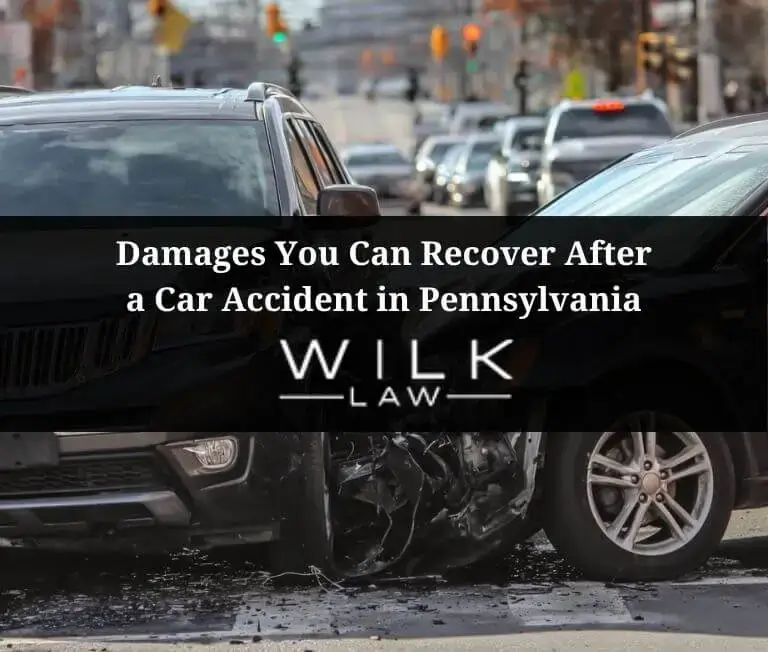
In Pennsylvania, car accident victims can recover three main types of damages: economic damages for measurable financial losses, such as medical bills and lost wages; non-economic damages for pain and suffering; and, in rare cases, punitive damages for extremely reckless behavior.
The amount you can recover depends heavily on your insurance choices, particularly whether you selected full tort or limited tort coverage when you purchased your policy.
Pennsylvania’s unique “choice no-fault” insurance system directly affects your right to seek compensation for pain and suffering. Your tort selection, the severity of your injuries, and Pennsylvania’s comparative negligence laws all play crucial roles in determining your final settlement amount.
The 3 Types of Damages You Can Recover After a Car Crash in Pennsylvania
Economic damages are your measurable financial losses, supported by receipts or documentation. Pennsylvania law requires full compensation for all reasonable and necessary economic losses.
These include medical expenses from emergency care through future treatment, lost wages while recovering, future earning capacity if you can’t return to work, property damage to your vehicle, and out-of-pocket costs like rental cars or medical equipment.
Non-economic damages compensate for intangible losses for which there are no receipts.
You can recover compensation for pain and suffering from physical discomfort, emotional distress like anxiety or PTSD, loss of enjoyment when you can’t participate in activities you once loved, loss of consortium affecting relationships with your spouse, and scarring or disfigurement causing permanent changes to your appearance.
Punitive damages are rare and only awarded when the at-fault driver acted with extreme recklessness. Examples include drunk driving or road rage incidents. Pennsylvania doesn’t cap punitive damages against private individuals.
How Does Pennsylvania’s Insurance System Affect Your Compensation?
Pennsylvania operates under a “choice no-fault” system that directly affects what damages you can recover. Your insurance choices determine your access to pain and suffering compensation after an accident.
PIP and First-Party Benefits
Personal Injury Protection (PIP) is mandatory coverage that pays regardless of fault. PIP covers medical bills and lost wages up to your policy limits, with a minimum requirement of $5,000. This coverage becomes your first source of compensation after any accident.
Full Tort vs Limited Tort
When you bought car insurance, you chose between “full tort” and “limited tort” coverage. This choice dramatically impacts your potential compensation.
- Full tort: Allows recovery of all damages, including pain and suffering, regardless of injury severity
- Limited tort: Restricts non-economic damages unless you meet specific exceptions, but costs less in premiums
Limited Tort Exceptions That Unlock Pain and Suffering
Even with limited tort, you can still recover pain and suffering damages if you meet certain exceptions. The “serious injury” threshold includes death, permanent serious disfigurement, or permanent impairment of body function.
Other exceptions include accidents involving DUI drivers, out-of-state vehicles, or commercial vehicles. These exceptions can unlock full compensation even with limited tort coverage.
UM and UIM Coverage
Uninsured (UM) and Underinsured (UIM) motorist coverage protects you when the at-fault driver lacks adequate insurance. You can “stack” this coverage by multiplying your limits by the number of vehicles on your policy to significantly increase available compensation.
How Fault Impacts Your Car Accident Damages in Pennsylvania
Even with proper insurance, your compensation depends on proving fault and your own degree of responsibility. Pennsylvania’s fault laws directly affect how much you can recover.
Modified Comparative Negligence 51 Percent Rule
Pennsylvania follows a modified comparative negligence rule where you can recover damages if you’re less than 51% at fault.
Your compensation is reduced by your percentage of fault under Pennsylvania’s shared fault rules. If you’re found partly at fault, your award will be reduced in proportion to your share of responsibility.
Evidence That Proves Fault and Damages
Strong evidence is crucial for proving fault and maximizing your compensation. Essential evidence includes police reports documenting the accident scene, medical records linking injuries to the crash, witness statements corroborating your account, photographs of injuries and vehicle damage, and expert testimony for complex cases.
You also need documentation of all expenses and losses through bills, receipts, and employment records. This evidence helps establish both liability and the full extent of your damages.
Are There Caps or Special Limits on Damages in Pennsylvania?
Pennsylvania generally doesn’t cap car accident damages, but there are important exceptions for government claims. These limitations can significantly impact your potential recovery.
Claims Against the Commonwealth and Local Agencies
Government entity claims face strict damage caps that vary by jurisdiction. If you’re filing a claim against the State of Pennsylvania, damages are capped at $250,000 per person and $1,000,000 per incident. Claims against local government entities face a $500,000 cap both per person and per incident.
These claims also require notice within six months and have additional restrictions on pain and suffering damages.
Wrongful Death and Survival Actions
Fatal accidents allow families to pursue two types of claims. Wrongful death actions compensate families for their losses, such as financial support and companionship. Survival actions recover damages the victim could have claimed, including pain and suffering before death.
Statute of Limitations and Notice Deadlines
You must file personal injury claims within the applicable statute of limitations, so consult an attorney promptly to protect your rights.
Claims against government entities are subject to special notice and filing deadlines, and minors may have different filing time limits. Missing these deadlines can eliminate your right to compensation entirely.
Award-Winning Car Accident Law Firm in Philadelphia, Pennsylvania
Evidence disappears, and witnesses’ memories fade quickly after accidents. Acting quickly protects your right to full compensation to rebuild your life.
At Wilk Law Personal Injury & Car Accident Lawyers, we believe every injury victim deserves fierce advocacy and personalized attention. We’ve secured millions of dollars for clients throughout West Chester, Philadelphia, Allentown, Reading, Coatesville, and more. Our contingency fee structure means you pay nothing unless we win your case.
We provide free consultations to evaluate all potential damages in your case.
Our experienced team handles all communication with insurance companies while you focus on recovery. We understand that predatory insurance companies often try to minimize payouts, which is why you need someone with experience and tenacity fighting for your rights.
Frequently Asked Questions
Can I Recover Pain and Suffering with Limited Tort?
Yes, but only if your injuries meet the serious injury threshold, like permanent impairment or disfigurement, or if specific exceptions apply, like DUI accidents.
How Does Being Partly at Fault Change My Payout?
Your compensation is reduced by your percentage of fault, so if you’re 30% at fault for a $100,000 case, you would receive $70,000.
Are My Settlement and Pain and Suffering Taxable?
No, compensation for physical injuries and pain and suffering is generally not taxable under federal law.
Can I Claim Household Help and Mileage?
Yes, these are recoverable out-of-pocket expenses if they result from your accident-related injuries and medical treatment.
How Do UM and UIM Coverage and Stacking Work in Pennsylvania?
UM/UIM coverage protects you when the at-fault driver lacks insurance, and stacking multiplies coverage limits by the number of vehicles on your policy.
Will Health Insurance or Medicare Take Part of My Settlement?
They may have subrogation rights to reimbursement, but an experienced attorney can often negotiate significant reductions in what you must repay.
How Long Will My Pennsylvania Car Accident Claim Take?
Many cases settle within months, but serious injuries requiring extensive treatment can take significantly longer to resolve.
Can I Recover for PTSD or Anxiety After a Crash?
Yes, emotional distress, including PTSD, is compensable as non-economic damages with proper medical documentation and diagnosis.
What Is Diminished Value and Can I Recover It?
Diminished value is your vehicle’s reduced worth after repairs, and Pennsylvania law allows recovery for this economic loss.
What if a Government Vehicle Caused My Crash?
You can still recover, but face stricter notice requirements within six months and the damage caps outlined above for government claims.