

In Pennsylvania, pedestrians have the right of way in crosswalks when no traffic signals are operating, but they must yield to vehicles when crossing outside crosswalks, against signals, or in areas with pedestrian tunnels or bridges.
Understanding your rights as a pedestrian is crucial because pedestrian accidents often result in serious injuries, and insurance companies frequently try to shift blame to avoid paying fair compensation.
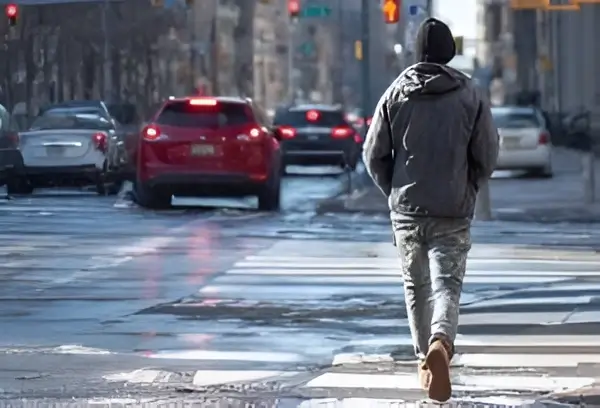
This article explains when you have the right of way, when you must yield to vehicles, how traffic signals affect these rules, what penalties apply for violations, and how Pennsylvania’s fault system works in pedestrian injury claims.
We’ll also cover the steps you should take after an accident, what compensation you can recover, and how insurance coverage applies to pedestrians.
Understanding Right of Way and Crosswalk Laws
Pennsylvania law gives pedestrians the right-of-way in crosswalks when no traffic signals are operating. Right of way means you have the legal right to proceed first, but it doesn’t mean you can walk into traffic unsafely.
You have the right of way in these specific locations:
- Marked crosswalks: Areas with painted white lines or stripes across the road.
- Unmarked crosswalks: The invisible extension of sidewalks at any intersection, even without painted lines.
- Mid-block crosswalks: Special crossing areas between intersections with signs or markings.
- When already crossing: Drivers must wait for you to finish crossing once you’ve entered the crosswalk.
The key rule is simple: if you’re in a crosswalk and there’s no traffic signal telling you to stop, vehicles must yield to you. However, you cannot suddenly step into the path of a car that’s too close to stop safely.
Do Unmarked Crosswalks Count as Crosswalks
Yes, unmarked crosswalks have the same legal status as marked ones. An unmarked crosswalk exists wherever a sidewalk would naturally continue across an intersection, even if there are no painted lines on the road.
Drivers must yield to you in these areas just like they would at a painted crosswalk. The only exception is if signs specifically prohibit pedestrian crossing at that location.
Do Drivers Have to Stop or Yield at Crosswalks
Drivers must slow down or stop as needed to let you cross safely. The law doesn’t require them to stop if you’re not there, but they must be prepared to stop when you are.
On multi-lane roads, the rule is stricter. If one vehicle stops for you, cars in the next lanes cannot pass it. This prevents the dangerous situation where you’re hidden behind the stopped car and get hit by someone in the adjacent lane.
When Must Pedestrians Yield to Vehicles
You don’t always have the right of way as a pedestrian. Pennsylvania law requires you to yield to vehicles in several situations. Yielding means waiting until it’s safe to cross without forcing drivers to brake suddenly or swerve.
You must yield to vehicles when:
- Crossing outside crosswalks: Any mid-block crossing where there’s no marked or unmarked crosswalk.
- Crossing between controlled intersections: Areas in urban zones between traffic signals.
- Entering from between parked cars: Stepping into the roadway from behind obstacles.
- When bridges or tunnels exist, a pedestrian overpass or underpass is provided.
- Crossing diagonally: Unless traffic signals specifically allow diagonal crossing.
The general rule is this: if you’re not in a crosswalk, you must yield to all traffic. In rural areas without signals, you can cross mid-block, but you take full responsibility for your safety.
Is Jaywalking Illegal in Pennsylvania
“Jaywalking” isn’t a specific legal term in Pennsylvania law, but the actions people call jaywalking are illegal. The state calls it “pedestrians on roadways” and regulates it under specific rules.
Crossing against a signal or outside a crosswalk when you’re required to use one is illegal and can result in a fine. However, not all mid-block crossing is jaywalking – in areas without signals, you can cross mid-block as long as you yield to all traffic.
How Do Signals Change Right of Way
Traffic signals override the basic crosswalk rules completely. When signals are present and working, both you and drivers must follow the lights rather than the general right-of-way rules.
Here’s what each signal means:
Walk Signal: When you see the walk signal, you have the right of way to enter the crosswalk. Drivers must yield to you and wait until you’ve safely crossed.
Don’t Walk/Wait Signal: This signal means you cannot enter the crosswalk. If you’re already crossing, finish quickly and safely. Drivers may proceed once the crosswalk is clear.
Countdown Timer: The flashing countdown shows how much time remains to finish crossing if you’re already in the crosswalk. Don’t start crossing when you see the countdown – it’s not permission to enter. Drivers must still yield to pedestrians already crossing.
Green Light (no pedestrian signal): At intersections without dedicated pedestrian signals, you should check for safety before crossing even when the light is green. Drivers must yield to pedestrians who are lawfully in the crosswalk.
The countdown timer does not permit starting crossing. It shows how much time you have left to finish crossing if you’re already in the crosswalk.
What Are Drivers’ Duties Toward Pedestrians
Pennsylvania law requires drivers to exercise due care to avoid hitting pedestrians, even when the pedestrian is breaking traffic laws. Due care means paying attention and being ready to stop or swerve if needed.
This duty applies everywhere, not just in crosswalks. Drivers can’t use your violation of traffic laws as an excuse to hit you if they could have avoided the accident.
What if a Vehicle Is Turning
Turning vehicles cause many pedestrian accidents because drivers focus on traffic gaps rather than on pedestrians, particularly at intersections. The law is clear: drivers making any turn must yield to pedestrians who are lawfully in the crosswalk.
This applies to both right and left turns. Even if you’re crossing with a walk signal, a turning driver might not see you, which could cause an accident.
Are There Special Rules in School Zones or for Blind Pedestrians?
Yes, Pennsylvania provides extra protection for vulnerable pedestrians. In school zones, drivers must follow reduced speed limits and exercise heightened caution around children.
For blind pedestrians using a white cane or a guide dog, drivers must always yield the right-of-way regardless of location. The law protects blind pedestrians from being blamed for accidents, even if they don’t use a cane or a guide dog.
What Are the Penalties for Violations
Both drivers and pedestrians face consequences for breaking traffic laws, but the penalties differ significantly.
Driver penalties for failing to yield include:
- Summary offense: A criminal charge on your record.
- Violations can result in fines, with penalties that may increase for repeat offenses.
- Three points: Added to your driver’s license.
- License suspension: Possible for multiple violations.
Pedestrian violations also carry fines, but the bigger concern is how violations affect your compensation if you’re injured. Insurance companies use any violation to argue you were at fault and reduce what they pay you.
How Does Fault Work in Pennsylvania Pedestrian Claims
Pennsylvania uses a modified comparative negligence system for injury claims. Comparative negligence means fault can be shared between multiple parties based on their actions.
You can still recover compensation if you’re partially at fault; whether you can recover depends on how fault is apportioned under Pennsylvania law. If you’re found 30% at fault, you’ll receive 70% of your total compensation.
The insurance company or court looks at all the evidence to assign fault percentages. They consider factors such as whether you were in a crosswalk, whether you were following the signals, and whether the driver was speeding or distracted.
Can I Recover if I Was Jaywalking or Crossing Against a Signal
Yes, you can still recover compensation even if you were crossing illegally. The driver might also be negligent if they were speeding, texting, or otherwise able to have avoided hitting you.
A violation doesn’t automatically prevent you from making a claim. The key question is whether your violation was the main cause of the accident or if the driver’s negligence played a larger role.
What Should I Do After a Pedestrian Accident
Your first priority is to get to safety and receive medical attention. If possible, move out of traffic, call 911, and let paramedics evaluate you, even if you feel fine.
Adrenaline masks pain and injury symptoms, so you might not realize how badly you’re hurt immediately after the accident.
Steps to Preserve Your Case
After ensuring your safety, take these actions to protect your legal rights:
- Document everything: Take photos of the vehicle, your injuries, the crosswalk markings, traffic signals, and road conditions.
- Get driver information: Collect the driver’s name, phone number, and insurance details.
- Find witnesses: Get contact information from anyone who saw the accident happen.
- Request footage: Ask the police for body-camera footage and check nearby security cameras.
- Report promptly: Notify your auto insurance and health insurance about the accident.
- Avoid recorded statements: Don’t give a statement to the other driver’s insurance without legal advice.
- Keep all records: Save medical bills, receipts, and any documents related to your injuries.
Time is critical for gathering evidence. Surveillance footage gets deleted, witnesses forget details, and physical evidence disappears quickly.
What Compensation Can I Recover
If you’re injured due to a driver’s negligence, Pennsylvania law allows you to recover two types of damages once liability in pedestrian accident claims is established. These compensate you for both your financial losses and personal suffering.
Economic damages cover your actual financial losses:
- Medical expenses: Emergency room visits, surgeries, doctor appointments, and future medical care.
- Lost wages: Income you missed while recovering and reduced future earning capacity.
- Rehabilitation costs: Physical therapy, occupational therapy, and medical equipment.
- Home modifications: Ramps, grab bars, or other accessibility improvements you need.
Non-economic damages compensate for personal losses that don’t have bills:
- Pain and suffering: Physical discomfort and emotional distress from your injuries.
- Loss of enjoyment: Activities you can no longer participate in or enjoy.
- Scarring and disfigurement: Permanent changes to your appearance.
- Emotional trauma: Anxiety, depression, or fear related to the accident.
Pennsylvania doesn’t cap these damages in pedestrian accident cases, meaning you can recover the full amount of your losses.
How Do Insurance and No-Fault Apply to Pedestrians
Pennsylvania’s no-fault insurance system covers pedestrians through Personal Injury Protection (PIP) benefits. PIP pays your medical bills regardless of who caused the accident.
If you own a car, your own PIP coverage pays first. If you don’t own a vehicle, you might be covered by a household member’s policy or the striking vehicle’s insurance company.
PIP typically covers medical expenses, lost wages, and essential services, but it has limits. Once you reach those limits, you’ll need to pursue additional compensation from the at-fault driver.
What if It’s a Hit-and-Run
Pedestrian hit-and-run accidents are covered by your Uninsured Motorist (UM) coverage if you have auto insurance. UM coverage treats the unknown driver as if they were uninsured.
If you don’t own a vehicle, you might access coverage through a household member’s policy. Pennsylvania also has an Assigned Claims Plan that provides benefits to uninsured pedestrians in hit-and-run cases.
Report hit-and-run accidents to the police immediately. The sooner you report, the better the police’s chance of finding the driver and witnesses.
What if a City Bus or Defective Crosswalk Is Involved
Claims against government entities have special rules and much shorter deadlines. If a city bus hits you or a broken traffic signal contributed to your accident, you must provide written notice within six months.
This notice requirement applies to cities, counties, and state agencies. Missing this deadline can prevent you from ever filing a lawsuit, even if you have a strong case.
Government entities also have sovereign immunity, which limits when you can sue them. An experienced attorney can help determine if your case falls within the allowed exceptions.
What Deadlines Apply to Pennsylvania Pedestrian Claims
Pennsylvania’s statute of limitations for pedestrian accidents gives you two years from the accident date to file a personal injury lawsuit. This deadline, called the statute of limitations, is strict – missing it means losing your right to compensation forever.
However, some claims have much shorter deadlines:
- Six months: Notice requirement for claims against government entities.
- One year: Some insurance policies require UM/UIM claims within this timeframe.
- Immediate: Many policies require prompt reporting of hit-and-run accidents.
Don’t wait to consult an attorney. Evidence disappears, witnesses move away, and important deadlines can pass while you’re focusing on recovery.
Pedestrian Accident Law Firm in West Chester, Pennsylvania
At Wilk Law Personal Injury & Car Accident Lawyers, we understand that pedestrian accidents can change your life in an instant. Insurance companies often try to blame pedestrians to avoid paying fair compensation, but we won’t let that happen to you.
Our experienced pedestrian accident lawyers have helped clients throughout West Chester, Reading, Allentown, Coatesville, and Pottstown recover millions in compensation. We handle every aspect of your case while you focus on healing.
We work on a contingency fee basis, which means you pay nothing unless we win your case. We’ll investigate the accident scene, gather surveillance footage, interview witnesses, and fight the insurance companies to get you the compensation you deserve.
Contact us today for your free, no-obligation consultation. We’ll review your case and explain your rights at no cost to you.
Frequently Asked Questions
Do Drivers Have to Wait Until I Clear the Entire Roadway?
Pennsylvania law requires drivers to wait until they clear their lane of travel plus the adjacent lane, not the entire street.
What Exactly Is an Unmarked Crosswalk?
An unmarked crosswalk exists at any intersection where sidewalks meet the street, even without painted lines, unless signs specifically prohibit crossing there.
If I Don’t Own a Car, Who Pays My Medical Bills?
You may be covered by a household member’s auto policy, the striking vehicle’s PIP coverage, or Pennsylvania’s Assigned Claims Plan for uninsured pedestrians.
What if My Child Were Injured While Crossing?
Children under seven cannot be found contributorily negligent under Pennsylvania law, and older children are held to age-appropriate standards of care rather than adult standards.
Can I Be Ticketed for Jaywalking and Still File a Claim?
Yes, receiving a citation doesn’t prevent you from filing a claim, though it may affect your percentage of fault and ultimate compensation amount.