

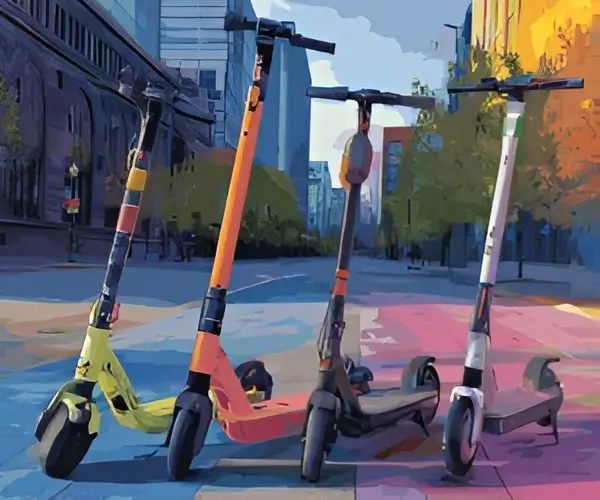
In Philadelphia, Pennsylvania, e-scooters from companies like Lime or Bird are illegal to operate on public roads and sidewalks because they cannot meet state vehicle inspection and equipment requirements.
Pennsylvania law creates distinct categories for different types of scooters, each with specific legal requirements and restrictions.
While some Pennsylvania cities have pilot programs allowing e-scooters, Philadelphia hasn’t adopted one yet. This means if you own a personal e-scooter, you can’t legally ride it anywhere except private property with the owner’s permission.
Getting caught riding an illegal e-scooter can hurt you financially and legally:
- Citations and Fines: Police can ticket you for operating an unregistered vehicle on public roads
- Device Impoundment: Officers can take your scooter, and you may have to pay fees to get it back
- Insurance Problems: If you crash while riding illegally, your insurance company will likely deny your claim
Where Can You Ride Different Types of Scooters in Philadelphia?
The rules about where you can ride depend entirely on what type of scooter you have. Pennsylvania law treats different vehicles very differently, and knowing these rules can save you from tickets and accidents.
Public Roads: Electric scooters are completely banned, but properly registered mopeds and motor scooters can use most public roads. You need valid registration, insurance, and the right license to ride legally on streets.
Sidewalks: All motorized vehicles are prohibited on sidewalks, especially in business districts. This includes mopeds, motor scooters, and e-scooters. Even if your vehicle is legal on roads, you can’t ride it on sidewalks.
Bike Lanes: Only legal vehicles like bicycles and compliant e-bikes can use bike lanes. Since e-scooters are illegal, they can’t use bike lanes either.
Private Property: This is the only place you can legally ride a stand-up electric scooter. You need the property owner’s permission, and you’re still responsible if you cause damage or injury.
What Counts as a Scooter Under Pennsylvania Law?
Pennsylvania law creates specific categories for two-wheeled vehicles, and each category has different rules. Understanding these differences is crucial because using the wrong vehicle or riding without proper licensing can lead to serious legal problems.
An electric scooter is a stand-up device with a throttle and no pedals. These are what most people think of when they hear “e-scooter.” A moped is a low-powered motorized two-wheeler that includes working pedals and is treated differently under the law than larger scooters. A motor scooter has an engine larger than 50cc, includes a seat, and does not require pedals.
Electric Scooters run on electric motors with varying speeds and don’t require pedals. These devices are illegal to operate on public roads in Pennsylvania because they can’t meet state vehicle requirements.
Mopeds have engines of 50cc or less, can’t exceed 25 mph, and must include working pedals. These vehicles are legal to operate with proper registration and insurance.
Motor Scooters feature engines over 50cc with no speed restrictions and don’t require pedals. You can legally ride these on public roads if you have the proper motorcycle license, registration, and insurance.
E-bikes use electric assist motors that help you pedal, with assistance cutting off at 20 mph. Pennsylvania treats these like traditional bicycles, making them legal to ride without special licensing.
The key difference is that mopeds and motor scooters can be registered and insured, while e-scooters cannot meet Pennsylvania’s vehicle requirements.
Do You Need a License Registration or Insurance for Scooters?
Your requirements depend completely on what type of scooter you want to ride. Getting this wrong can result in fines, license suspension, and insurance problems if you’re in an accident.
For Mopeds and 49cc Scooters: You need a regular Class C driver’s license, the same one you use to drive a car. Your moped must be registered with Pennsylvania and carry liability insurance. The good news is that mopeds don’t need annual safety inspections like cars do.
For Motor Scooters Over 50cc: You must get a Class M motorcycle license, which requires passing both written and road tests. These larger scooters need titles, annual registration, liability insurance, and yearly safety inspections just like motorcycles.
For Electric Scooters: You cannot register or insure e-scooters in Pennsylvania because they don’t meet state vehicle codes. This creates a major problem because you can’t get legal insurance coverage for a vehicle that can’t be registered.
The licensing requirements exist for your safety and the safety of others on the road. Operating without proper credentials puts you at risk for tickets and leaves you vulnerable if you’re in an accident.
Does Insurance Cover Scooter Accidents in Pennsylvania?
Pennsylvania uses a “no-fault” insurance system, which means your own car insurance typically pays your medical bills first after an accident. However, scooter accidents create complicated insurance situations that many people don’t understand until it’s too late.
Your Personal Injury Protection (PIP) coverage normally pays medical expenses regardless of who caused the accident. But Pennsylvania law allows insurance companies to exclude motorcycle-related injuries from PIP coverage. Since many scooters are classified as motorcycles, your PIP might not apply.
Insurance coverage varies significantly by vehicle type:
- E-scooter Accidents: Insurance companies almost always deny claims because e-scooters are illegal to operate on public roads
- Moped and Motor Scooter Accidents: Coverage depends on your specific policy and whether the insurer classifies your vehicle as a motorcycle
- E-bike Accidents: These are usually treated like bicycle accidents, meaning your auto insurance probably won’t cover you
If your auto insurance denies coverage, you might need to use your health insurance, uninsured motorist coverage, or pursue the at-fault party’s liability insurance. Our experienced Philadelphia personal injury lawyers help clients navigate these complex coverage issues to find all possible sources of compensation.
Who Is Liable After a Scooter Crash?
When you’re injured in a scooter accident, determining who’s responsible isn’t always straightforward. Pennsylvania follows a modified comparative negligence rule, which means you can still recover money for your injuries as long as you’re 50% or less at fault for the accident.
For example, if you’re found 35% at fault, you can still collect 65% of your damages from the other responsible parties.
If you were riding an illegal e-scooter, the other party’s insurance company will definitely try to blame you more for the accident. However, riding an illegal vehicle doesn’t automatically prevent you from getting compensation. If another person’s negligence caused your injuries, they can still be held responsible.
Several parties might be liable for your scooter accident:
- Negligent drivers who were speeding, texting, drunk, or not paying attention
- Property owners who failed to maintain safe conditions on their premises
- Government entities responsible for dangerous road conditions or poor signage
- Manufacturers if a defective part on your scooter contributed to the accident
What to Do After a Scooter Crash
Your actions immediately after a scooter crash can make or break your ability to get fair compensation for your injuries. Stay as calm as possible and focus on protecting your health and legal rights.
Call 911 immediately, even if you think you’re not seriously injured. Many scooter accident injuries don’t show symptoms right away, and having paramedics evaluate you creates important medical documentation. Accept medical attention from paramedics even if you feel fine.
Take photos of everything while you’re still at the scene. Use your phone to document the accident location, all vehicles involved, your injuries, property damage, and road conditions. Get contact and insurance information from all drivers involved in the accident.
Don’t apologize or admit fault to anyone at the scene. Even saying “I’m sorry” can be used against you later by insurance companies. Stick to basic facts about what happened without speculating about who was at fault.
Steps to Take Now
If you’ve recently been in a scooter crash, take these additional steps as soon as possible. See a doctor for a complete medical evaluation even if the emergency room cleared you, because some injuries take days to develop symptoms.
Report the accident to your insurance company, but be careful about giving recorded statements without legal advice. Insurance adjusters are trained to ask questions that might hurt your claim later.
Preserve all evidence from your accident, including your damaged scooter, helmet, and clothing. Don’t repair or throw away anything until you’ve spoken with our Philadelphia scooter accident lawyers about your case.
Experienced Scooter Accident Law Firm in Philadelphia Pennsylvania
At Wilk Law Personal Injury & Car Accident Lawyers, we understand how a scooter accident can turn your life upside down in seconds. Dealing with injuries, medical bills, and insurance companies while trying to understand Pennsylvania’s complex scooter laws is overwhelming for anyone.
We’ve helped countless clients navigate the complicated legal issues surrounding scooter accidents, including cases involving illegal e-scooters. Insurance companies often try to deny claims by arguing that riding an illegal vehicle bars any recovery, but we know how to fight back against these tactics.
If you’ve been hurt in a scooter accident, contact us today for a free consultation to learn how we can help you get the compensation you deserve.
Frequently Asked Questions
Are Electric Scooters Currently Illegal in Philadelphia?
Yes, privately owned stand-up electric scooters are illegal to operate on all public roads and sidewalks in Philadelphia.
Can I Ride an E-scooter on Sidewalks or in Bike Lanes in Center City?
No, e-scooters are prohibited on sidewalks and bike lanes because they’re classified as unregistered motor vehicles under Pennsylvania law.
Do I Need a License for a 49cc Scooter in Pennsylvania?
Yes, you need at least a Class C driver’s license to legally operate any moped or scooter with a 49cc engine in Pennsylvania.
Do 50cc Scooters Need to Be Registered and Insured in Philadelphia?
Yes, any scooter with an engine 50cc or larger must be titled, registered, insured, and inspected annually just like a motorcycle.
Are E-bikes Treated the Same as E-scooters in Pennsylvania?
No, e-bikes that require pedaling are legal and treated like traditional bicycles, while stand-up e-scooters are illegal on public roads.
Does My Auto Insurance Cover Me if I’m Hit While on a Scooter?
Coverage depends on your specific policy and the type of scooter, as many auto policies exclude motorcycle-classified vehicles from PIP coverage.
What Should I Do Immediately After a Scooter Crash in Philadelphia?
Call 911, accept medical attention, take photos of the scene and damage, exchange information with other parties, and avoid admitting fault.
Will Riding an Illegal E-scooter Prevent Me from Getting Compensation?
Not necessarily, but it complicates your case because insurance companies will try to assign you more fault for the accident.